
The Accidental PM Behind the Economic Revival: Era of silence with significant impact

Pranav Sharma
“Any intelligent fool can make things bigger, more complex and more violent. It takes a touch of genius and a lot of courage to move in the opposite direction. – EF Shumakar”
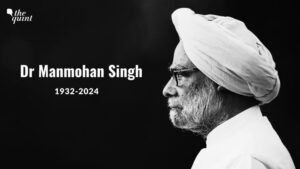
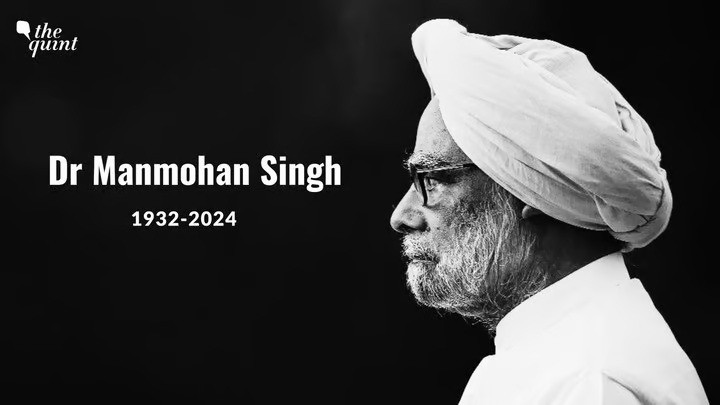
Manmohan Singh a name in himself needs no introduction. A man whose legacy is as quiet as it is monumental,he has often been labelled as the Reluctant Prime Minister, the Accidental PM, or even a puppet of the Gandhi family. Critics called him silent, others saw him as a man who preferred to work behind the curtains. But the irony? Behind this unassuming demeanour was one of India’s most accomplished statesmen—a politician, economist, academic, and bureaucrat—who served as the 13th Prime Minister of India from 2004 to 2014.
On the quiet night of Thursday, 26th December, while much of India was fast asleep, the architect of India’s economic liberalization, Dr Manmohan Singh, took his last breath at the age of 92. He was rushed to AIIMS, New Delhi after he lost consciousness at home. But the man who had always worked silently, even in his final moments, departed without a sound, leaving behind an indelible mark on India’s economic and political landscape.
For decades, Manmohan Singh, an economic prodigy, chose to remain in the shadows, letting his work speak louder than his words. This characteristic silence defined him, whether as Finance Minister under Narasimha Rao’s coalition government in 1991 or as Prime Minister. His brilliance first came to the forefront during the 1991 Balance of Payments (BOP) Crisis, when India was on the brink of an economic collapse. It was during this moment of national crisis that Singh, an apolitical economist, was chosen as the Finance Minister—an unconventional and historic move.
What followed was nothing short of revolutionary. Dr Singh introduced the LPG (Liberalization, Privatization, and Globalization) reforms, reshaping India’s economic destiny. Amidst fierce opposition and political scepticism, he dismantled decades of protectionism and introduced structural reforms that liberalized the economy. His decisions were bold, pragmatic, and forward-looking, steering India away from insolvency and onto a path of economic growth.
While the reforms brought India back from the brink, they came at a political cost. The Congress Party fared poorly in the 1996 general election, and Singh moved to the opposition benches in the Rajya Sabha during the Atal Bihari Vajpayee-led BJP government from 1998 to 2004. However, even in opposition, Singh remained a voice of reason and intellect, always advocating for policies that put India’s progress first. Also, for the same reason he was named “Finance Minister of the Year” by Euromoney and Asiamoney, for his distinguished economic reforms in 1993.
In 2004, destiny once again beckoned Singh. When the Congress-led United Progressive Alliance (UPA) returned to power, its chairperson, Sonia Gandhi, made a decision that shocked many—she declined the prime ministership and handed the reins to Singh. This unexpected move placed Singh at the helm of a government that would oversee some of India’s most transformative policies.
“A nation is a society united by a delusion about its ancestry and by common hatred of its neighbours.”
Manmohan Singh understood this irony deeply. Throughout his tenure, he navigated the intricate web of India’s diverse cultural and political fabric, always prioritizing unity and harmony over division. His diplomacy and leadership ensured that India grew as a nation not by feeding into this delusion but by striving for progress that transcended borders and histories.
During his first tenure as Prime Minister, Singh’s leadership was instrumental in the execution of landmark initiatives that touched the lives of millions. From the National Rural Health Mission to the Rural Employment Guarantee Scheme, from the Right to Information Act to the establishment of the Unique Identification Authority (Aadhaar), Singh’s government focused on empowerment, transparency, and inclusion. His quiet resolve ensured these initiatives were not just on paper but were implemented with impact.
The challenges, however, never ceased. In 2008, Singh’s government faced its most significant political crisis when the Left Front withdrew support over the contentious India-US civil nuclear agreement. Refusing to yield, Singh stood firm, securing the deal that not only strengthened India’s global stature but also cemented his reputation as a leader who prioritized national interest over political expediency.
Singh’s international vision extended beyond bilateral ties. In 2009, he co-founded BRICS, creating a platform for emerging economies to collaborate and influence global economic policies. Meanwhile, under his leadership, India’s economy grew at an unprecedented pace, reinforcing his legacy as the architect of modern India’s economic resurgence.
The 2009 general election marked yet another milestone. With an increased mandate, the UPA retained power, and Singh continued as Prime Minister. However, as his second term progressed, allegations of corruption and policy paralysis emerged, casting a shadow over his government. Yet, through it all, Singh’s personal integrity remained untarnished—a rare and precious trait in Indian politics.
After his tenure ended in 2014, Singh chose not to contest the Prime Ministership, gracefully stepping aside to let the democratic process run its course. Though he never served as a member of the Lok Sabha, Singh’s parliamentary career spanned decades as a Rajya Sabha member, first representing Assam (1991–2019) and later Rajasthan (2019–2024).
Manmohan Singh’s life and career have been a masterclass in humility, resilience, and quiet determination. As the architect of modern India’s economic resurgence, he defied the noise of politics with the power of intellect and integrity. His departure leaves a void, not just in Indian politics but in the conscience of a nation that owes much of its progress to his vision.
“As the rise of polarising politics and partisan media feed off each other, and as social media amplifies the shrillness, there is no glory in mere information anymore. It is an opinion that counts, and louder is better. Outrage is a toolkit that is good for TRPs, an us-v/s-them narrative that can be bolstered by articulating leading rhetorical questions in defending decibels to reel sympathisers and unsuspecting viewers in.”
Singh’s tenure was a stark contrast to this modern chaos. He rarely spoke but always listened. He led with reason, not rhetoric. In an era where sensationalism is mistaken for substance, Singh’s understated leadership stands as a poignant reminder of the strength found in quiet resolve and informed decisions.
History may call him reluctant, but for those who know the depth of his contributions, he was nothing less than a relentless saviour of the Indian economy. And while the curtains may have closed on his earthly journey, his legacy will continue to illuminate India’s path for generations to come.