

Why has Ambedkar once a voice of radical social change, become a political pawn?

Rajeswari Roy
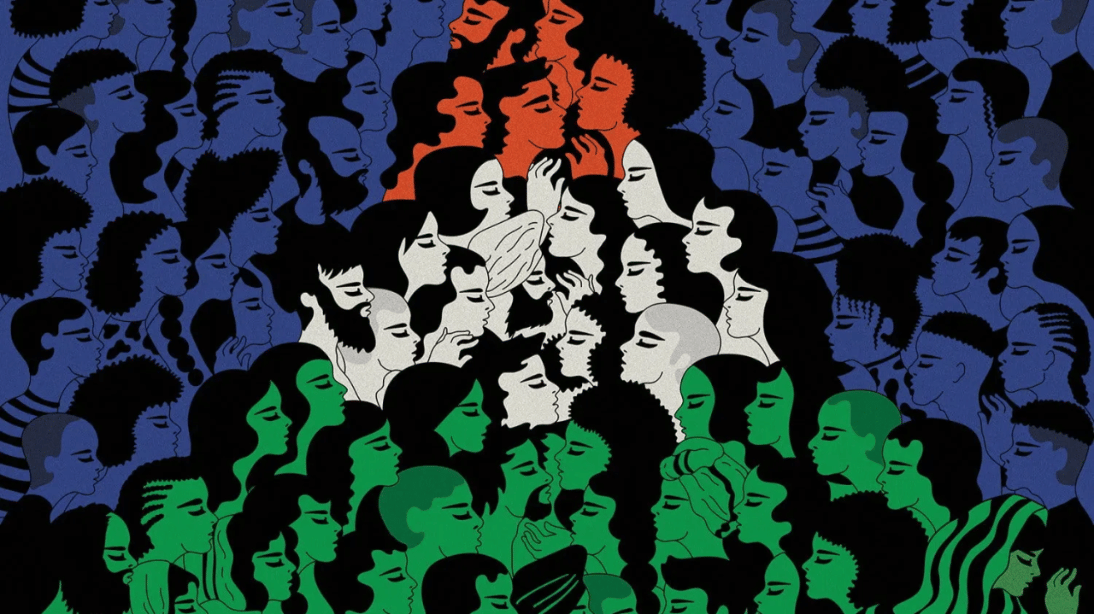
Dr. B.R. Ambedkar, a key architect of India’s Constitution and a well-known Dalit leader, has recently resurfaced as a topic of political debate in India, owing largely to political parties using his legacy to appeal to Dalit voters. Ambedkar undoubtedly left a significant mark in India. He was a Dalit leader, social justice activist, and the father of the Indian Constitution. How can we forget his statement about the Constitution: “If I find the Constitution being misused, I shall be the first to burn it”? But if we finally comprehend Ambedkar, we’ll realize that he never intended to be revered. However, in modern times, we erect statues of him to gain the approval of society’s backward classes. But here’s the question: why should we do that?
Union Home Minister Amit Shah’s remark about Dr. B.R. Ambedkar has generated a political debate. In Lucknow, Bahujan Samaj Party chief Mayawati on Saturday hit out at Union Home Minister Amit Shah, saying that he should apologise for his statement on B.R. Ambedkar. On December 19, the Congress Party announced a nationwide demonstration demanding Shah’s resignation. What did the honorable Home Minister say? Amit Shah made the demand during the Rajya Sabha’s winter session. Shah accused the Congress leader of reducing Ambedkar’s name to a mere “fashion.” At the center of the row is Union Home Minister Amit Shah’s remark in which he referred to Dr. B.R. Ambedkar and mocked what he suggested was lip service to Ambedkar. “There is a fashion to keep repeating Ambedkar, Ambedkar… If the opposition had taken God’s name so often, then they would have reached heaven,” he said, calling out the Congress for not giving “Babasaheb his due.”
This article explores why Ambedkar’s theories have recently sparked debate among Indian political parties. We will try to figure out why Ambedkar is relevant in contemporary Indian politics. Dr. B.R. Ambedkar, with his pivotal role in India’s social reform and constitutional development, has recently gained popularity as an icon. This phenomenon shows the growing appreciation for his contributions to social justice, equality, and democracy. Key elements of this iconography include:
Symbol of Social Justice
Ambedkar belonged to the Mahar caste. The Mahars were treated as untouchables and subjected to discrimination. The social structure and caste system created barriers between the lower and higher castes, preventing them from interacting with one another. Even if one side wanted to talk, the other side dismissed it.
The downtrodden lacked the courage to approach the higher castes, and the doors of temples and schools were closed to them. It was in such a society that Ambedkar was born and raised. However, fighting all odds, he attained higher education, and soon after completing his studies, he launched himself politically, fighting for the rights of the depressed classes and against societal inequality. Justice is a complex notion with multiple sources and perspectives. It has been explored from various angles within the confines of the period, location, and circumstances in which people lived.
Ambedkar’s vision of social justice promotes liberty, equality, and fraternity for all humans. He advocated for a social system that prioritizes positive relationships between individuals in all aspects of life. As a rationalist and humanist, he opposed hypocrisy, injustice, and the exploitation of others through religion. He advocated for a religion founded on universal moral principles that apply to all times, places, and cultures.
Political Appropriation and Mobilization
Ambedkar, a member of the Bombay Legislative Assembly since 1926, expressed the rural poor’s grievances through mass actions. His fight against the Khoti land tenure system helped many rural people escape economic servitude. His successful fight against Mahar Vatan helped liberate many rural poor from virtual serfdom. Dr. Ambedkar launched the Independent Labour Party in 1936. Trade unions prioritized worker rights but ignored the human rights of untouchable laborers.
In the industrial field, Dr. Ambedkar founded the Independent Labour Party in 1936. While the prevailing trade unions fought for the rights of workers, they were indifferent to the rights of untouchable workers as human beings. The new political party took up their cause. Consequently, as the Labour Member of the Viceroy’s Executive Council from 1942 to 1946, Dr. Ambedkar was instrumental in bringing about several labor reforms, including the establishment of employment exchanges and generally laying the foundations of industrial relations in Independent India. Political parties across the spectrum increasingly invoke Ambedkar’s legacy to connect with diverse voter bases in contemporary India.
His ideas on equality and empowerment are frequently referenced in electoral campaigns, especially among Dalit and backward communities. Leaders and functionaries of various political parties pay tributes to B.R. Ambedkar on his birth anniversary and reach out to voters from the SC and OBC communities.
Cultural Representation
There has been a noticeable increase in the number of monuments, memorials, and parks dedicated to Ambedkar. The stately Ambedkar Memorial in Lucknow and the under-construction Dr. B.R. Ambedkar Memorial in Mumbai are two notable examples. Art and media – including films, novels, songs, and documentaries about Ambedkar’s life and philosophy – have become increasingly popular, spreading his message.
The first statue of Ambedkar was created and installed in the 1960s. During Ambedkar’s lifetime, his fans had already begun to raise cemented statues of him. According to Tartakov, the statues were not created for aesthetic reasons but rather as symbols of his followers’ reverence for him. Ambedkar, who formerly represented untouchables, has now become a symbol of rebellion against oppression.
The pictures of Gandhi, Ambedkar, and other svarna nationalist leaders at the CAA protests as well as the ongoing farmer’s revolt have yet to be recreated in sculpted art. Renan (1882) describes him as the leader of those who have suffered together. The placement of Ambedkar’s statue in public validates democracy by allowing Dalits to be seen in contrast to the caste system.
Digital Revival
Social media platforms have become a hub for spreading Ambedkarite ideas. His quotes, speeches, and writings are widely shared, especially during significant dates like his birth and death anniversaries. Online communities promote discussions about his vision for an egalitarian society.
Educational Integration
Dr. Ambedkar’s ideas on constitutionalism, economics, and human rights are progressively being integrated into academic courses. Universities and research centers dedicated to his work have sprouted all across India.
The growing iconization has also sparked debates. Some argue that his legacy is being selectively appropriated for political purposes, while others see this as a long-overdue recognition of his contributions.